Mastering Document Automation
The technology worked fine. The platform went live on schedule. Training sessions ran. The templates were there.
Six months later, the fee earners were drafting in Word.
This is the most common way an automation project fails. Not with a breakdown. With a slow withdrawal. The tool becomes optional. Then inconvenient. Then forgotten. By the time anyone notices, the platform is sitting in the corner of the firm and nobody quite knows when people stopped using it.
It isn't a technology story. It's a change-management story. And unlike most technology risks, it's almost entirely predictable.
Two audiences. Different needs. Don't run them together.
Most automation rollouts serve two completely different user groups, and treating them the same is usually the first mistake.
Fee earners want one thing. Clean output, fast, with no friction. They are not interested in how the logic works. They want to open a template, answer a few questions, and get a document they can send. If the experience is clunky like a slow interface, confusing question flow, output that needs reformatting, they stop using it. Not loudly. They just reach for Word instead.
Template owners - the PSLs, the knowledge leads, the partners who care about precedent, need something different. They want to understand the logic. They want to see the conditional branches, test edge cases, build new variants without raising a ticket with IT.
The same training session frustrates both. Fee earners sit through explanations of authoring tools they'll never open. Template owners get a walkthrough of a finished template that doesn't help them build anything. Both leave the session unconvinced.
The firms that get adoption right design two separate training programmes from day one. One for the people who use the templates. One for the people who own them.
Adoption builds on visible wins, not slide decks
Advocacy doesn't build on promises. It builds on something a partner can see in the first deal they put through the new platform.
The firms that move adoption fastest don't launch firm-wide. They pick one practice group, one transaction type, one template where the saving is undeniable. They run a proof of concept on a live deal, not a demo, not a pilot in a sandbox, an actual matter with a real client and let the results do the work.
A leading global law firm we worked with put a single template through a live transaction. Six hours saved on the deal. Six practice groups adopted Avvoka after that one pilot. Internal advocacy grew from a single example, not a launch plan.
When a fee earner sees six hours come back on a matter they're billing, they tell the next fee earner. That's a more durable sell than any training session.
Adoption planning belongs at the start, not the end
The firms that treat adoption as something to address once the templates are live tend to end up with a technically successful migration and a practically unused platform.
The better version: your adoption strategy is part of your migration business case from day one. Pilot template chosen before contract signature. Training tracks scoped before kick-off. The first visible win planned, not hoped for.
The technology isn't where these projects fail. It's where they start.
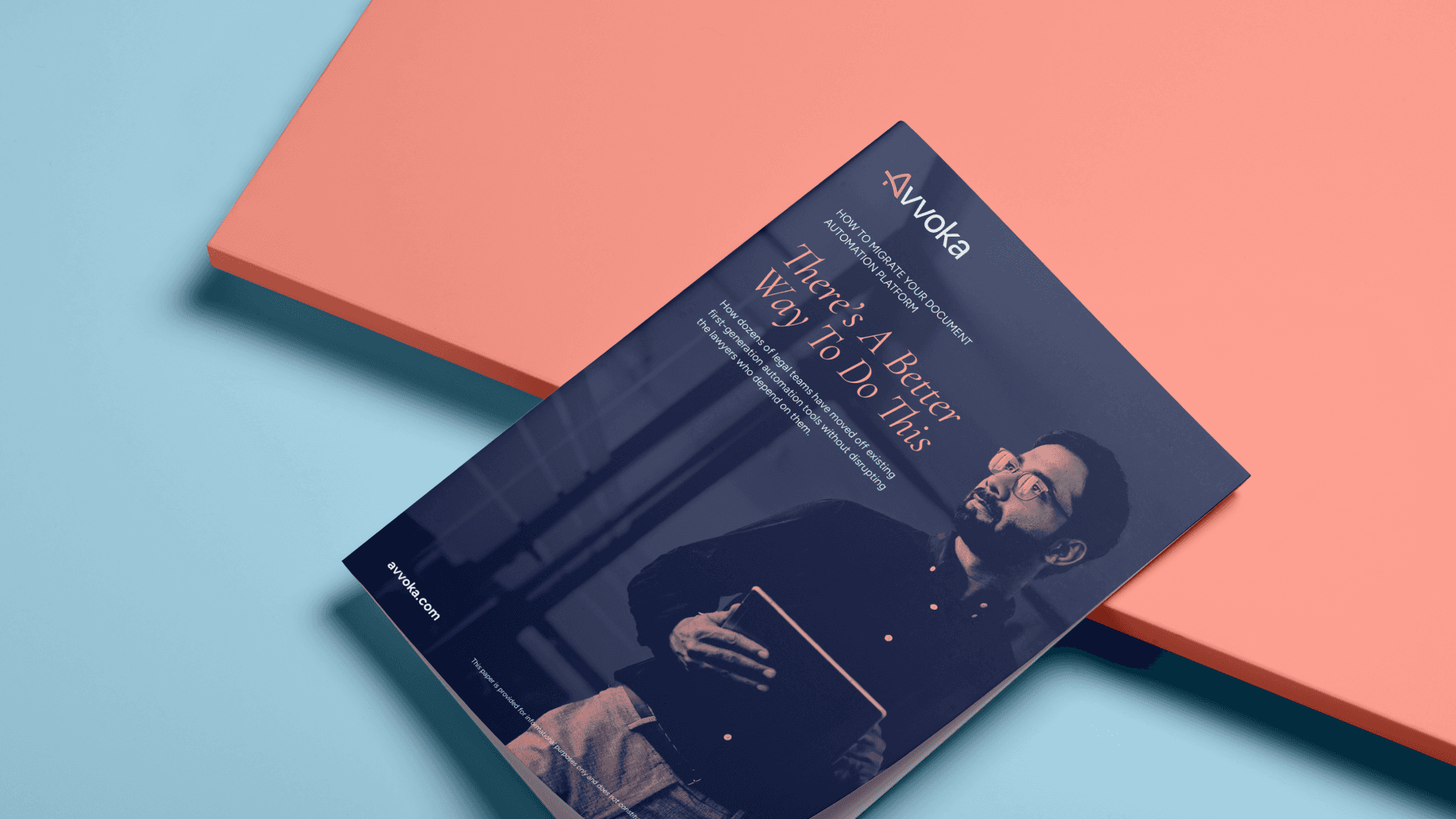
The guide includes the full adoption playbook — pilot selection, training tracks, and the proof-of-concept model firms have used to drive practice group buy-in before the wider launch. Download it here.