
Future Trends
Document automation is often sold on a simple promise: invest time upfront to build a template, then benefit from faster, more consistent drafting every time it is used.
That promise is real. For many teams, automation delivers genuine gains in speed, consistency and control. The question that tends to go unexamined is what happens to those gains as the library grows.
Where the pressure builds
The issue is not automation itself. It is what happens when legal standards continue to evolve across a library that has grown to dozens or hundreds of templates.
A regulatory change, a revised fallback position, an update to house style — any of these may need to be reflected across a significant portion of the library. If the relevant clauses and drafting logic are duplicated across separate files, that update is no longer a single task. It becomes a process of finding every instance, making the change correctly in each one, and verifying nothing has been missed.
The larger the library, the more that process resembles a maintenance operation rather than a drafting one.
Why it gets harder over time
The difficulty rarely comes from the number of templates alone. It tends to come from how logic is stored across them.
When the same clause or drafting position is recreated in each template rather than shared between them, a few familiar problems follow. Updates are hard to track because finding every instance across a large document set is not straightforward. Consistency is hard to preserve because a single missed template means the library is no longer aligned. And over time, maintenance becomes dependent on whoever built the original logic, because the more complex the automation, the harder it is for someone new to understand how a template behaves or where a change needs to be made.
At a certain point the challenge shifts. It is no longer primarily about creating templates. It is about governing them.
What a more maintainable approach looks like
The firms that manage this well tend to build their libraries differently from the start or restructure them once the maintenance burden becomes visible.
The practical difference is whether drafting logic is shared or duplicated. When clauses and components are created once and referenced across multiple templates, an update to the shared version flows through to everything that depends on it. The change is made in one place rather than many. The risk of inconsistency shrinks considerably.
That also changes what governance looks like. When components are shared, ownership and versioning matter in a more meaningful way. A change in one place has consequences across the library. That discipline, built into how the system is structured, is what makes a large library manageable rather than unwieldy.
What to evaluate before you commit
For firms evaluating drafting platforms, build speed is an obvious consideration. But maintainability tends to matter more over time, and it is worth examining before committing to a direction.
A useful way to look at it is to ask not only whether a platform makes it easy to automate a document, but what happens when that document needs to change. Whether updates can be made once and reflected across the library. Whether every change requires a manual exercise across multiple files.
That distinction is easier to address at the point of selection than to retrofit later.
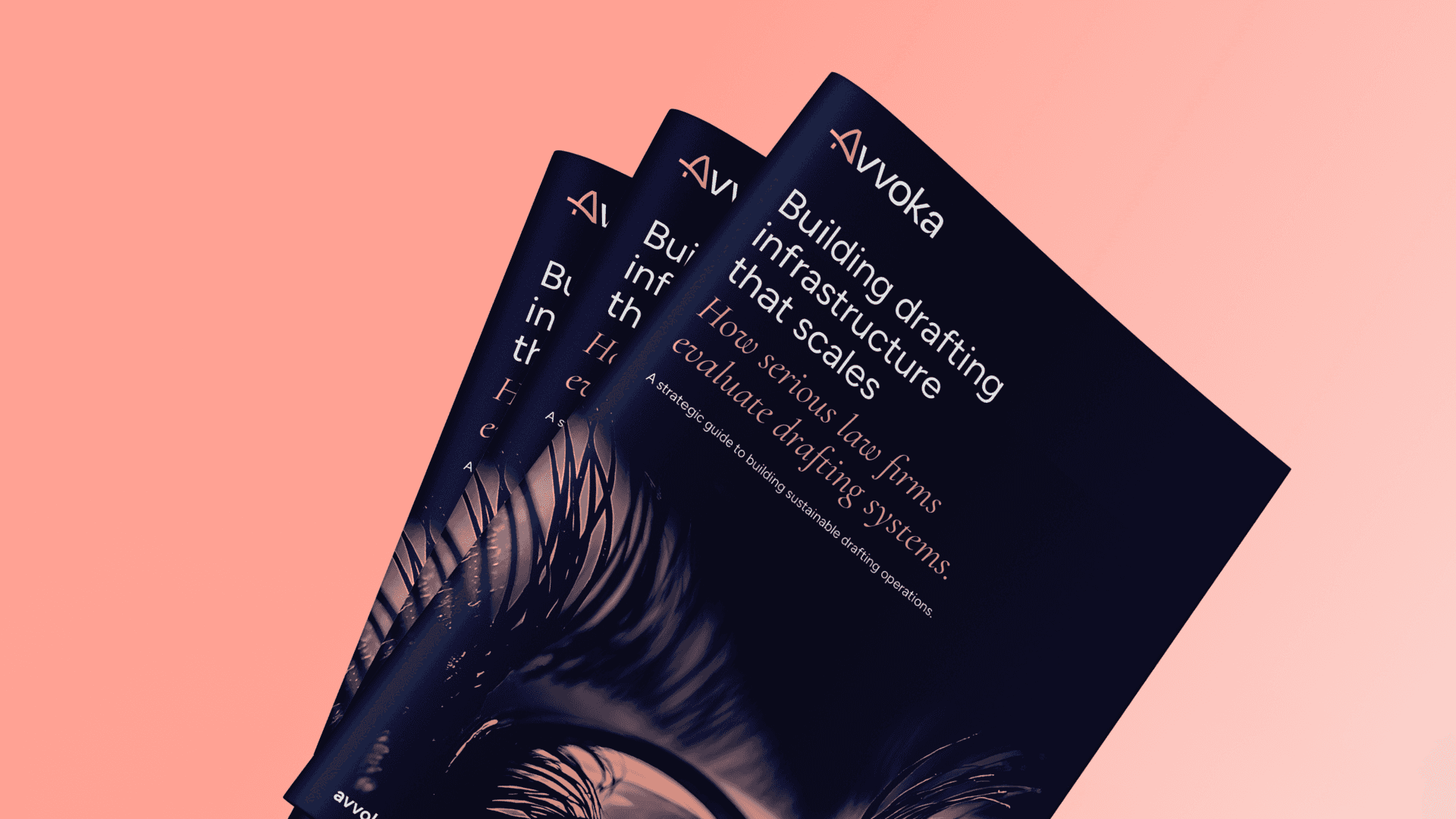
Building Drafting Infrastructure That Scales covers how to structure a template library for long-term maintainability, including architecture, change management and what to look for when evaluating platforms. Download the guide.