
Mastering Document Automation
Most firms start looking at migration because one person has become the bottleneck for the whole firm.
A specialist who knows the system. A queue of template requests building behind them. Practice groups who used to ask, and quietly learned not to. Fee earners drafting from scratch because waiting four weeks for a clause update isn't viable when the deal closes Friday.
"We have just one person who is basically responsible for building documents," is how the head of technology at a UK firm put it to us. Some firms have one of those. Some have half of one, a senior PSL with a slice of the role wedged into a job that already had a job. The dependency is the same either way.
What happens when the queue stops clearing
The cost isn't the queue itself. It's the behaviour the queue produces.
Fee earners stop trusting the template library is current, so they default to Word. The library becomes decorative. The 20% of templates that drive most of the firm's deal volume get maintained because someone shouts when they break. Everything else drifts.
The specialist gets more irreplaceable each year. Comfortable for one person, unsustainable for everyone else.
By the time the firm notices, the pattern has been compounding for years. Practice groups have stopped raising it because raising it didn't help. The bottleneck has stopped looking like a problem and started looking like the working assumption about what automation is for.
The platform is incidental to all of this.
The dependency is the design
The legacy platforms - HotDocs, Contract Express, PatternBuilder - weren't built badly. They were built to be operated by a specialist. The expert pipeline is the architecture.
That's why the bottleneck doesn't shift when the firm hires a second specialist, upgrades the licence, or buys add-on modules. Every template, every clause update, every new variant still has to pass through specialist hands before it reaches a fee earner. Add capacity at the front and the queue lengthens behind it.
Most firms that try to fix the dependency on the platform's own terms end up with the same problem in a different shape.
Migration is the moment to rethink the model
The question isn't whether to replace the platform. It's whether to keep building on an architecture where every change passes through one person before it reaches a fee earner.
Most firms we talk to already know the answer. They're not waiting for proof. They're waiting for a moment that gives them cover to start.
Migration is usually that moment.
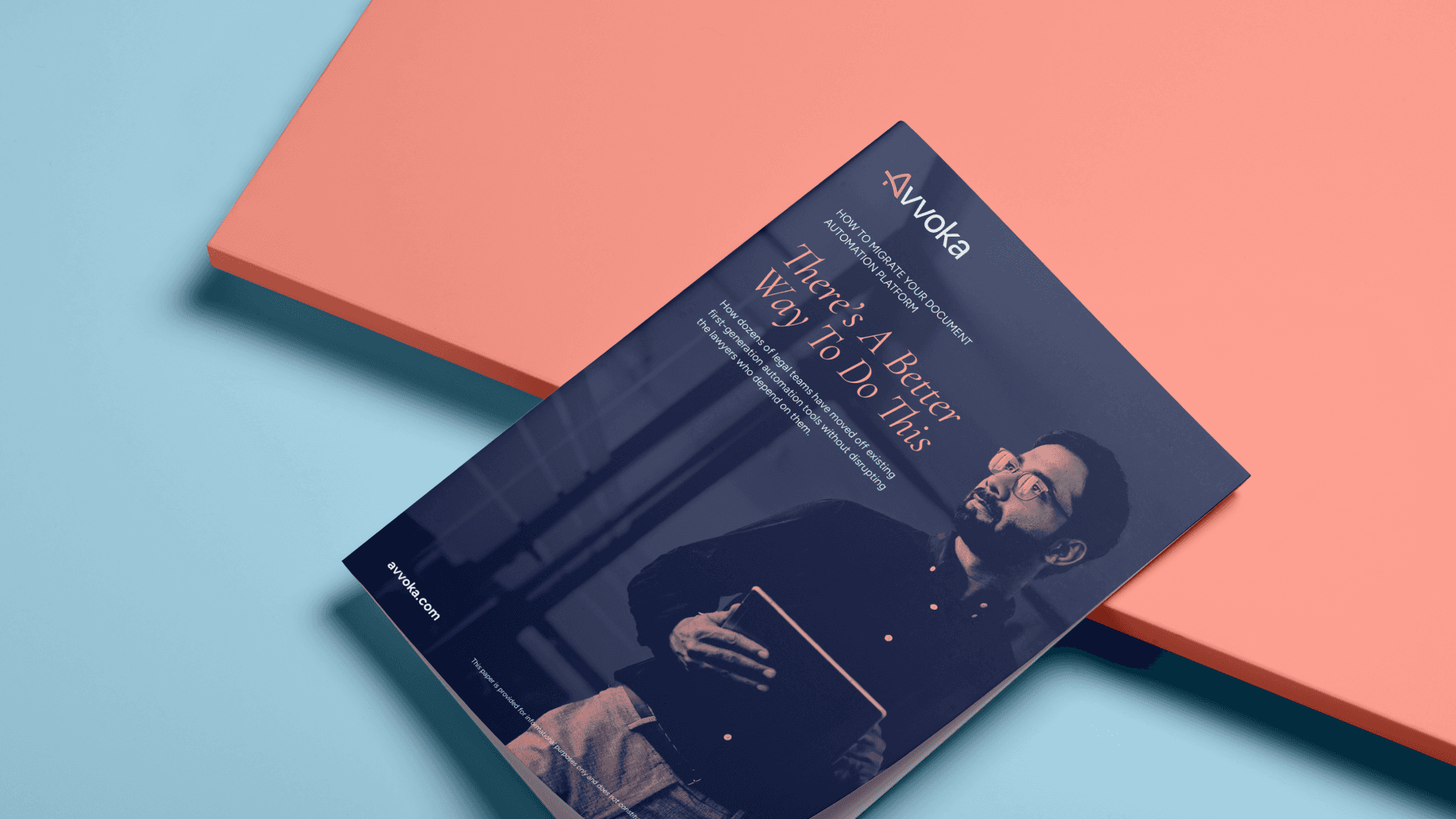
→ Our migration guide walks through how firms have made the move from audit to go-live without putting active matters at risk. Download it here.