
Mastering Document Automation
Most firms we work with start a migration conversation with the same line: we have two thousand templates, this will take eighteen months, we can't realistically do it.
The number is usually wrong.
A European firm came to us believing they had 1,400 templates in active use. After the audit, the number was 312. The remaining 1,088 were duplicates, outdated variants, or documents drafted years ago for deals that closed and never recurred. Seventy-seven percent of the legacy library was retired in place. The migration that had been scoped at 18 months completed in seven.
That ratio isn't unusual. About 20% of a firm's templates account for the majority of document volume. The rest are sediment. Some of it useful. Most of it not..
And there's another library
The unofficial one.
Not rogue. Not careless. Completely rational.
A partner has a version of the NDA that reflects how the firm really does NDAs and it’s not the version in the library, which hasn't been touched since the last drafting retreat. An associate has a side letter with the conditional logic already built in. A PSL two practices over maintains four versions of the main acquisition template, each tuned for a different buyer profile, none of them in any governance system.
These are dark templates. The ones relied on in practice, kept outside the official library, quietly maintained by the people who use them most.
They exist because the official library stopped keeping up. They multiply because there's no mechanism to pull them back in.
A partner's desktop folder is the most active part of the firm's drafting infrastructure. Nobody owns it. Nobody audits it. It's also where the best work tends to live.
Why migration forces both conversations at the same time
The audit surfaces dead weight. That conversation is uncomfortable. Someone built every one of those templates, and some of those people still work at the firm. Retiring a template feels like a judgment.
The dark template question is harder. The templates that live on partners' desktops are often the best work in the firm, the most refined, the most specific, the most genuinely useful. They just don't live anywhere governable.
Migration provides the political cover for both conversations. There's a legitimate, externally driven reason to ask every practice group: what are you actually using, and where does it live? Most PSLs have wanted to ask that question for years. Migration is what lets them.
Firms that use the moment well don't just move templates from one platform to another. They rebuild the library as a representation of how the firm actually drafts.
That's a different outcome from a lift-and-shift.
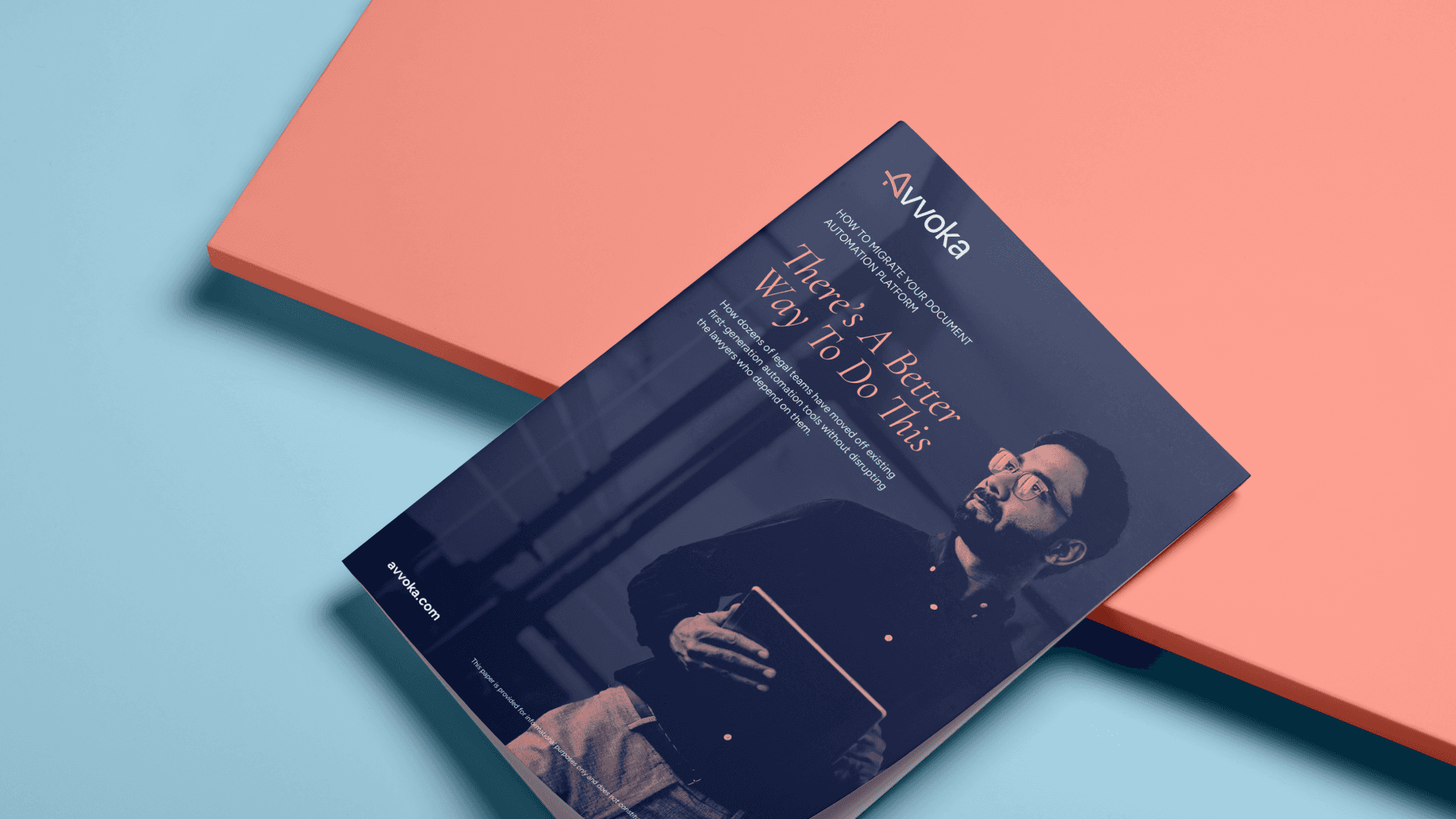
The guide includes the template audit framework firms have used to scope migrations accurately before committing to a timeline. Download it here.