
Drafting guides
The complete guide to document automation software for law firms 4.3
Models are a commodity. What isn't: the templates, precedents and judgement your firm has built up over years.
By
Andrew Upton
Reviewed by
Kate Morrison
6 min read
In short
Contract automation is the use of software to produce contracts from a firm's approved templates and drafting rules. A lawyer, or someone in the business, answers questions about the deal and gets a first draft that already reflects the firm's agreed positions. It removes the routine drafting so lawyers spend their time on negotiation and judgement.
On this page
See it in a demo
A 45-minute walkthrough of the platform, with time for your questions.
What contract automation is, and what it isn't
Most contracts a firm produces aren't new. They're the firm's agreed position on a familiar document, adjusted for the parties, the price and a handful of deal points. Contract automation captures that agreed position once and applies it every time.
In practice, a template holds the firm's approved wording and the rules for when each clause applies. The person drafting answers a short questionnaire. The software produces a draft in Word with the right clauses, the right fallbacks and the right defined terms already in place.
Which contracts to automate first
The right first contract is boring. It's drafted often, the firm's position on it is settled and the variations follow clear rules.
|
|
|---|---|
NDAs and confidentiality agreements | Heavily negotiated bespoke agreements |
Engagement letters | Documents drafted once or twice a year |
Standard supplier and customer terms | Templates the partners still disagree on |
What changes for lawyers and for the business
[Section copy from the contract automation article]
Where AI fits in contract automation
[Section copy from the contract automation article]
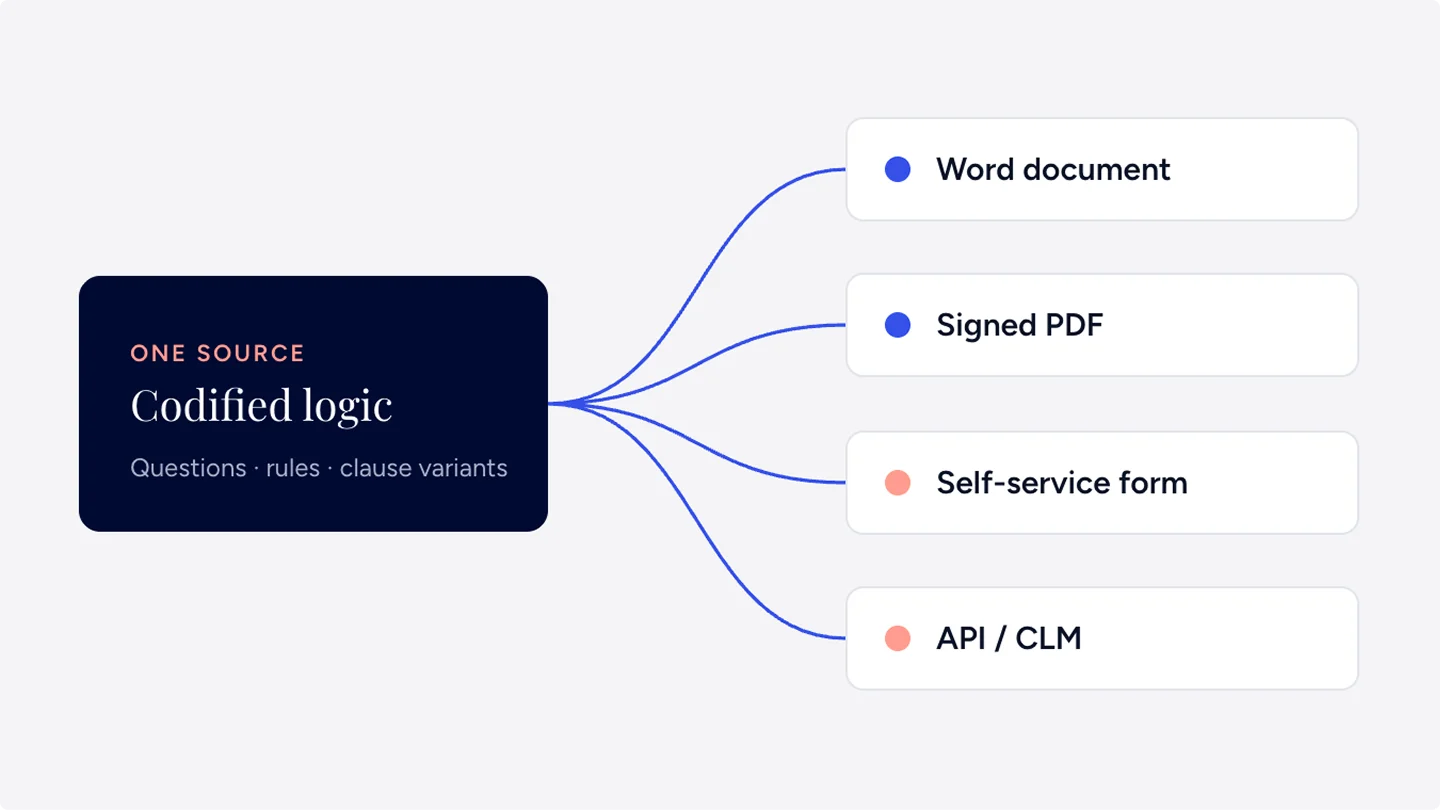
Logic is defined once and rendered wherever the work happens.
How to get started
[Section copy from the contract automation article]
Frequently asked questions
What is contract automation?
Software that produces contracts from a firm's approved templates and drafting rules, based on answers about the deal.
What's the difference between contract automation and contract management?
Contract automation produces the draft. Contract lifecycle management (CLM) handles what happens after signing, such as storage, approvals, renewals and obligations.
Which contracts should be automated first?
Contracts drafted often, with a settled firm position and variations that follow clear rules. NDAs, engagement letters and standard commercial terms are common first choices.
See how Avvoka drafts from your firm's standard
A 45-minute discovery demo of the platform, with time to ask about the documents your team drafts most.
What contract automation is, and what it isn't
Most contracts a firm produces aren't new. They're the firm's agreed position on a familiar document, adjusted for the parties, the price and a handful of deal points. Contract automation captures that agreed position once and applies it every time.
In practice, a template holds the firm's approved wording and the rules for when each clause applies. The person drafting answers a short questionnaire. The software produces a draft in Word with the right clauses, the right fallbacks and the right defined terms already in place.
Which contracts to automate first
The right first contract is boring. It's drafted often, the firm's position on it is settled and the variations follow clear rules.
|
|
|---|---|
NDAs and confidentiality agreements | Heavily negotiated bespoke agreements |
Engagement letters | Documents drafted once or twice a year |
Standard supplier and customer terms | Templates the partners still disagree on |
What changes for lawyers and for the business
[Section copy from the contract automation article]
Where AI fits in contract automation
[Section copy from the contract automation article]
Logic is defined once and rendered wherever the work happens.
How to get started
[Section copy from the contract automation article]
Frequently asked questions
What is contract automation?
Software that produces contracts from a firm's approved templates and drafting rules, based on answers about the deal.
What's the difference between contract automation and contract management?
Contract automation produces the draft. Contract lifecycle management (CLM) handles what happens after signing, such as storage, approvals, renewals and obligations.
Which contracts should be automated first?
Contracts drafted often, with a settled firm position and variations that follow clear rules. NDAs, engagement letters and standard commercial terms are common first choices.
See how Avvoka drafts from your firm's standard
A 45-minute discovery demo of the platform, with time to ask about the documents your team drafts most.
Last Updated
Share this article
ABOUT THE AUTHORS
Andrew Upton
Content Creator
Lorem Ipsum is simply dummy text of the printing and typesetting industry. Lorem Ipsum is simply dummy text of the printing and typesetting industry.
Andrew Upton
Content Creator
Lorem Ipsum is simply dummy text of the printing and typesetting industry. Lorem Ipsum is simply dummy text of the printing and typesetting industry.
Related guides
JOIN IN
Want more content Like this?
Want more content Like this?
Want more content Like this?
Sign up for our monthly newsletter, or see Avvoka in action with a live demo.